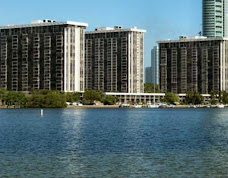
Most tax-friendly states for retirees
BY ROBERT POWELL, MarketWatch — 03/29/12
BOSTON -- There's plenty to consider when you contemplate where to live in retirement. Will family and friends be nearby? Does the weather suit you? What sort of activities are there? And especially high on the list of factors to consider are taxes -- one of life's two certainties and one of the largest expenses people face in retirement.
Is the state that you have designs on retiring to tax friendly or not? And the basic questions to answer are these: How does the state tax your income? How does it tax your property and your consumption? And what's the overall tax burden?
As some know, older Americans tend to generate income from several sources in retirement, including income from wages or self-employment; Social Security; pensions; and personal assets, including taxable and tax-deferred accounts. Taxes on those sources of income, in essence, mean less money in your pocket for your golden years. So before moving to this or that state, you'll need to figure out whether and how the state taxes your various sources of income.
You will also need to consider taxes on the other side of the ledger, including state and local property taxes, state and local sales and use taxes. If you live large, you might pay plenty in property taxes and sales taxes.
And, then you'll need to calculate what your overall personal tax burden will be. It's a taxing exercise to be sure.
Thankfully, CCH, a Wolters Kluwer company, has created several charts and tables that look at how states tax income, sales and other transactions, including retirement income. We've culled from that list -- with the help of Kathleen Thies, a state tax analyst for CCH -- the top income-tax friendly states for retirees, states that don't tax income, including Social Security and pension income. And then we added some commentary from the Tax Foundation about other taxes, such as property and sales, and the overall tax burden, in those income-tax friendly states.
Of course, before moving to one of these income-tax friendly states, be sure to calculate your personal overall tax burden given all your actual and likely sources of income, given your spending patterns, and given your actual or desired standard of living.
Remember, what you save on income taxes in one state you might pay in property taxes or sales taxes. And vice versa. What you save on property and sales taxes in one state you might pay in income taxes. "There are no free lunches so you need to be savvy about what your particular needs are in retirement," said Thies.
One more note, for those who itemize deductions, there are five types of deductible non-business taxes, including state, local and foreign income taxes; state, local and foreign real estate taxes; state, and local personal property taxes; state and local sales taxes, and qualified motor vehicle taxes.
In other words, to calculate your overall personal tax burden, you'll have to figure out whether you can take advantage of these deductions.
That said, here's a closer look at the states that are -- if nothing else -- the friendliest for income tax purposes, and, in some cases, fairly friendly from an overall tax burden, based on CCH and the Tax Foundation research. The states are listed in order of tax friendliness from an overall tax burden point of view, as measured by the Tax Foundation.
1. Alaska:Alaska might not seem like a retirement haven based on the usual factors considered such as, say, weather. But it might be the perfect place for one's golden years if taxes are a big concern. Alaska doesn't tax personal income, including Social Security benefits and pension income. And, there's no state-imposed sales tax. This is not to say that you won't pay any taxes in Alaska. Instead, it means that you'll pay other types of taxes, such as property taxes.
2. Nevada: Many retirees rely on income from several sources to make ends meet these days. If you fall into that camp, Nevada might be the place for you. This state doesn't tax income, Social Security benefits or pension income. And its property taxes are reasonable, too. Its sales tax, however, is higher than the national average.
3. South Dakota: It might not be the first or even the second state that you think of when contemplating where to live in retirement. But South Dakota is nothing if not a tax friendly state. The state doesn't tax individual income, Social Security benefits or pension income. And the overall tax burden is among the lowest in the nation.
4. Wyoming: There's no individual income tax on Social Security benefits or pension income in Wyoming, according to CCH. But that's not to say you won't have to pay any taxes in Wyoming. Property taxes and sales taxes tend to be higher than the national average.
5. Texas: In Texas, there's no individual income tax. But property and sales taxes tend to be higher than the rest of the nation.
6. Florida: There are plenty of reasons why people choose to retire to the Sunshine state, the low tax burden being among those reasons. There's no individual income tax on Social Security benefits or pension income. There are pipers to pay, however, in the forms of property and sales taxes.
7. Washington: Another state not generally viewed as a traditional retirement haven is, however, income tax friendly for retirees. There's no individual income tax on Social Security benefits or pension income. But if you plan on spending lots money while in retirement, Washington might not be your first choice. It has a relatively high sales tax.
--------------------------------------------------------------------------------
Copyright © 2012 Dow Jones & Company, Inc. All Rights Reserved.
What You Will Find Here

- OJOS11
- Articles and news of general interest about investing, saving, personal finance, retirement, insurance, saving on taxes, college funding, financial literacy, estate planning, consumer education, long term care, financial services, help for seniors and business owners.
Blog List
-
-
Scott Bessent compares AI CEOs who warn of catastrophe to Hannibal Lecter: 'Stop me before I kill again' - Treasury Secretary Scott Bessent said Silicon Valley doesn't need the government to intervene.
-
In Big Warning to the Fed, Bond Yields Rise Despite Weak Jobs - The bond market is telling the Fed it wants another interest rate hike.
-
Bracing for More Inflation Volatility - Consumers, business owners and investors are growing increasingly concerned about rising inflation, and its potential repercussions.
-
Everybody Else Is Reading This - Snowflakes That Stay On My Nose And Eyelashes Above The Law Trump’s New Birth Control […]
-
Maximizing Employer Stock Options - Oct 29 – On this edition of Lifetime Income, Paul Horn and Chris Preitauer discuss the benefits of employee stock options and how to best benefit from th...
-
Wayfair Needs to Prove This Isn't as Good as It Gets - Earnings were encouraging, but questions remain about the online retailer's long-term viability.
-
Hannity Promises To Expose CNN & NBC News In "EpicFail" - *"Tick tock."* In a mysterious tweet yesterday evening to his *3.19 million followers,* Fox News' Sean Hannity offered a preview of what is to come from ...
-
Don’t Forget These Important Retirement Deadlines - *Now that fall is in full swing, be sure to mark your calendar for steps that can help boost your tax-advantage retirement savings.*

Showing posts with label best states for taxes. Show all posts
Showing posts with label best states for taxes. Show all posts
The Best and the Worst States for Muni Bonds (Barrons)

Barron's Cover | MONDAY, AUGUST 29, 2011
Good, Bad and Ugly
By JONATHAN R. LAING There's hope for states that accept structural change, but pain for those that won't. Are you listening, Illinois and California?
For most states, fiscal 2012 is shaping up as a brutal year. They've already had to close a collective gap of more than $100 billion between their projected revenues and previously budgeted expenses, mostly due to anemic sales taxes and personal and corporate-income levies. And all this comes after three years of large budget shortfalls, during which most of the low-hanging fruit in expenses had been plucked and rainy-day funds and other reserves had been plundered.
Likewise, just about all of the $165 billion in federal stimulus money that had helped to close state budget gaps since the 2008-09 financial crisis has been spent. Thus, the cuts for fiscal 2012, which for most states began last month, promise to be particularly painful, leading to employee layoffs and reduced human-services spending on programs such as Medicaid.
Education will bear the brunt, as states are forced to trim their funding to public universities and K-through-12 school districts. The latter, particularly in low-income areas, will especially suffer from the lagged effect of the housing bust on a falling property-tax take.
Yet there's hope amid the gloom for many of the states, and for the $1.5 trillion state municipal-bond market. Tax revenue has begun to rise again, after falling cataclysmically for five straight quarters during the Great Recession.
In fact, state-tax revenue in fiscal 2011's first quarter was up 9.3%, on average, over the year-earlier figure, reports the respected Nelson A. Rockefeller Institute of Government at the State University of New York at Albany. This was the fifth straight quarterly improvement. To be sure, the revenue picture could darken if the U.S. economy double-dips. (The numbers in each category in the tables accompanying this article generally are based on the most recent and comprehensive data available, and so their dates don't all coincide. However, they do paint a good picture of each state's relative position against the others.)
And since the 2010 elections, new governors, mostly Republican, have come to the fore, unbeholden to the public-employee unions that have used political muscle to win cushy contracts and fat retiree pension and health benefits. The roster of new-breed, social-Darwinist figures includes the likes of Scott Walker of Wisconsin, John Kasich of Ohio, Rick Scott of Florida and Chris Christie of New Jersey, all following the successful path of two-term Indiana Gov. Mitch Daniels. Even prominent Democrat and New York Governor Andrew Cuomo, scion of a family steeped in Franklin Roosevelt's New Deal, has pushed state unions to accept contracts with a three-year wage freeze and five unpaid furlough days in the current fiscal year.
The governors want the unions to contribute more to their pension funds and health plans to ensure the systems' soundness. Controversially, Walker and Kasich even have tried to convince the unions to surrender or reduce their collective-bargaining rights. Moreover, many states are creating new tiers of public employees provided with much less munificent pension and health-care plans. Retirement ages are being boosted, automatic cost-of-living adjustments to pensions are being eliminated, pension vesting periods are being increased and shenanigans like income-spiking at the end of careers to fatten benefits are being banned. Such moves will do much to ameliorate a long-term pension and retiree health-benefit funding gap that The Pew Center on the States puts at $1.26 trillion.
At the same time, some states, including New York, are trying to cap and slow property-tax hikes. And while such governors as Walker, Christie and Scott are putting the axe to spending, they're also cutting taxes on corporations and the wealthy, with the aim of boosting employment and investment. Wisconsin even scaled back its earned-income tax credit for 152,000 working families ($518 for a family of five), to partially defray the cost of tax cuts for big earners. Trickle-up economics is in vogue in these states.
The process has been messy and, sometimes, noisy; witness the union demonstrations at the capitol building in Madison, Wis., in February. Yet the municipal-bond market has rallied sharply since late last year, when banking seer Meredith Whitney set off a panic by predicting that there would be as many as 100 major muni-bond defaults in calendar year 2011, totaling $100 billion or more, because of state and local financial problems. Through Aug. 12, a recent Bank of America Merrill Lynch report notes that defaults have been modest this year, at $757.8 million, or just 0.026% of total outstanding municipal debt. And most of the troubled issuers have been small ones that depend on revenue from special-assessment districts, housing developments and hospital complexes, not general tax revenues.
To Howard Cure, director of municipal research at Evercore Wealth Management in New York, it's "inconceivable" that any state will default on its general-obligation debt. According to Cure, the only risk that investors run in state debt, beyond the risk that could arise if interest rates jump, would come from credit downgrades or a change in market perceptions of a state's financial prospects, which could quickly push down prices of existing state bonds.
To help investors, the tables Barron's has compiled show how all 50 states rank, based on seven key financial and economic variables. The data were compiled by Janney Capital Markets and Evercore. The states are sorted by their Standard &Poor's credit ratings to make comparisons easier.
Our first statistic shows the amount of federal spending each state receives as a percentage of the state's gross domestic product. The source can be: defense or nondefense work; procurement contracts; grants; and salaries and wages paid to state residents by Uncle Sam. This reading is particularly timely, in that federal outlays face cuts for years to come, due to growing budget-deficit stringency.
Here, a couple of triple-A names -- Virginia and Maryland -- stick out. Federal spending accounts for 29.8% of Virginia's economy and 28.5% of Maryland's, far above the 19.7% that's the average in the U.S. Just think of all the federal employees who live in Arlington or Bethesda but work in Washington, or of the hordes who labor in the vast office parks outside the Beltway, filled with government consultants and federal contractors. The credit-rating firm Moody's has both states on "negative outlook" in the wake of the national-debt anxiety.
Medicaid as a percentage of total state spending is another key indicator. Nationally, the program, which provides health care for the poor, accounts for 21% of all state spending -- and will loom much larger if the Obama health reforms are upheld by the courts and fold in millions of currently uninsured into Medicaid, for which the federal government picks up about half the tab. Already, however, like Pac-Man, the program has ferociously eaten away at state financial resources due tomedical-cost inflation and rising enrollment.
Here, comparisons are difficult, because some states, like California (22%) and Illinois (33%), offer a far more extensive range of services than, say, Texas (8%). The Lone Star state also benefits because some members of its large Hispanic population are reluctant to sign up for government programs due to citizenship issues.
States with large urban underclasses also tend to have higher Medicaid rolls. That has swelled their spending -- New York's by 28%, Pennsylvania's by 28% and, of course, Illinois' (above). Not surprisingly, to curb the rise in Medicaid costs, states like New York are considering moving away from their current fee-for-service payment systems to managed care.
Tax-collection growth is where the rubber meets the road for most states. Many of the stars in this respect are benefiting from rising prices for oil, food and minerals. North Dakota had a 46% jump in first-quarter fiscal 2011 collections, boosted by exploitation of the gas- and oil-rich Bakken shale shelf. Alaska, with its tax take up by 16.7%, likewise benefited from higher oil prices.
Even some Rust Belt states -- Michigan (up 20.9%) and Ohio (up 22%) were helped, in part, by improved manufacturing. But, tax increases were the biggest factor in the improved revenue numbers. Illinois (up 13.7%) raised personal income and corporate levies at the beginning of calendar-year 2011. California, on the other hand, saw a package of emergency tax increases expire at the end of fiscal 2010, and thus realized a paltry 5.7% rise in tax receipts in fiscal 2011's first quarter, and there's little reason to believe that the situation has improved. So the no-longer-so-Golden State could face additional budget shortfalls in the current fiscal year.
Overall, however, tax-supported state debt as a percentage of state gross national product has hardly reached alarming levels. Even states like Connecticut and Hawaii, whose debt exceeds 10% of their gross domestic products, aren't basket cases. Both centralize more functions that local governments do elsewhere, so the figures are a bit deceiving.
The same doesn't hold true for the chronic underfunding problems of state public-employee pension plans. The public-employee pension funding gap accounts for around $660 billion of the aforementioned $1.26 trillion retiree-benefits shortfall tabulated by Pew. And unlike retiree health care, pension benefits are harder to fix.
Particularly shaky are states like Illinois, with only 51% of its pension obligations funded, and California, with 81%. Their dysfunctional state governments, allied with public-employee unions, are seemingly incapable of making needed reforms. Several times in recent years, Illinois has floated bond issues to make its pension contributions, only to find that it paid more in interest on them than it made on its investments.
The last two factors in our tables are the percentage of mortgages in foreclosure or seriously delinquent -- meaning 90 days in arrears -- as of fiscal 2011's first quarter, and the state's unemployment rate.
Florida, Nevada, Arizona and California still have big mortgage problems, stemming from the faux housing boom of the George W. Bush years. That encouraged local governments to wildly expand, using soaring property-tax revenue, and individuals to spend more, by taking out home-equity loans. When the boom ended, the spending did, too, and joblessness soared. Based on June numbers, the states with the worst jobless rates were Florida (10.6%), and Michigan and South Carolina (both 10.5%).
In sum, our tables should provide some clues for muni-bond investors puzzling out where to invest. But the most important factor isn't listed -- a state's willingness to embrace structural change. In that regard, Illinois and California bring up the rear.

.E-mail: editors@barrons.com
Copyright 2011 Dow Jones & Company, Inc. All Rights Reserved


Best and Worst Places to Retire (Marketwatch)
Dec. 9, 2010, 3:03 p.m. EST
The 10 worst states for retirees
Commentary: Taxes, weather take glitter off golden years
By Robert Powell, MarketWatch
BOSTON (MarketWatch) — Plenty of folks are aware of the best states for retirees. But what are the 10 worst states in which to spend your golden years?
People of Illinois, California, New York, Rhode Island, New Jersey, Ohio, Wisconsin, Massachusetts, Connecticut and Nevada — you probably already know the answer.
The list, with Illinois leading the pack, comes from website TopRetirements.com. According to John Brady, president of TopRetirements.com, the 10 states earn this dubious distinction largely because of three factors: fiscal health, taxation, climate. See the worst-state rankings at TopRetirements.com.
Worst retirement states Illinois and California top the list of the worst states to retire to, according to TopRetirements.com. As for fiscal health, six of the 10 worst states for retirees on TopRetirements.com’s list were among those just identified by a Pew Center for States report as being in “fiscal peril.”
The report, "Beyond California: States in Fiscal Peril," showed that “some of the same pressures that have pushed California toward economic disaster are wreaking havoc in a number of other states, with potentially damaging consequences for the entire country.”
Arizona, Florida, Illinois, Michigan, Nevada, New Jersey, Oregon, Rhode Island and Wisconsin joined California as the 10 most troubled states, according to Pew’s analysis.
Of note, TopRetirements.com’s Brady suggested that retirees and would-be retirees might want to avoid states in fiscal peril because these locales might be expected to face decreasing services and increasing taxation.
Topping his website's list, Illinois’s fiscal health could be the worst of any state, observed Brady. “It even borrowed money to fund its pension obligations,” he said. As for California, he said the Golden State — though it does have a warm climate — is expensive and its finances are in disarray. What’s more, he added, it has paid some bills with vouchers.
New York wasn’t mentioned as being in fiscal trouble by the Pew Center, but it does have “very high taxes, including property taxes.” In fact, Brady said New York has the second-highest tax burden and fifth-highest per capita property taxes. Plus, he said, the Empire State has a “dysfunctional state legislature.” As if that wasn’t bad enough, it’s terrifically expensive to live in New York. The only benefit to living in New York, he said, is that pensions are exempt from income tax.
As for Rhode Island, Brady said it’s probably the worst-off state in the Northeast from a financial viewpoint. It also has high taxes, though he noted that the state does boast some great places to live.
New Jersey, according to Brady’s analysis, has the highest property taxes in the U.S., as well as the highest total tax burden of any state, as reported in a 2008 Tax Foundation report. Plus, New Jersey has serious pension-funding issues, Brady noted. States with the greatest tax burdens after New Jersey were New York, Connecticut, Maryland, Hawaii, California, Ohio, Vermont, Wisconsin and Rhode Island, joined by the District of Columbia.
According to Brady, Ohio has high taxes and high unemployment (9.9% in October). Plus, it has cold winters.
Of the 40 largest cities in the United States, Milwaukee has the coldest winter weather, based on normal daily temperatures, according to Current Results, a website that tracks weather trends. The lakeside Wisconsin city’s daily winter mean temperature is 24.1 degrees Fahrenheit. But fellow Great Lakes metropolis Cleveland is the fourth-coldest U.S. city, with a daily winter mean temperature that’s not much higher at 28.4 degrees Fahrenheit.
Wisconsin, as noted, is doubly cursed in these rankings as a high-tax state with cold weather. Plus, it has high property taxes. The only good news, at least for those to whom it applies, is that the Badger State doesn’t tax military pensions.
In a related survey, USAA and Military.com announced this week that Waco, Texas, tops the first-ever "Best Places for Military Retirement" list. In its report, USAA and Military.com focused on U.S. communities that offer “a high quality of life and help maximize military retiree benefits as service members manage their ‘first retirement’ from the armed forces and begin planning their ‘second retirement’ from civilian life.” Other places on that list included, in order, Oklahoma City; Austin, Texas; College Station, Texas; Harrisburg, Pa.; San Angelo, Texas; Madison, Wis.; Pittsburgh; New Orleans; and Syracuse, N.Y.
New England had two other states on Brady’s list of worst places for retirees: Massachusetts, which has high taxes including high property taxes and a very high cost of living, and Connecticut, which has the third-highest tax burden of any state as well as high property taxes. “It has some terrific places to live, but the cost of living is very high,” he said of Connecticut. What’s worse, the Nutmeg State taxes Social Security.
States with the highest cost of living in the third quarter of 2010 were, in order, Hawaii, Alaska, California, New Jersey, New York, Connecticut, Rhode Island, Maryland, Vermont and New Hampshire, according to a Missouri Economic Research and Information Center analysis. The District of Columbia also makes the list. Read the analysis, which noted among other things that Missouri had the eighth-lowest cost of living in the U.S.
Ironically, the 10th-worst place to retire is the one state where it’s easy to find a cheap place to live: Nevada. As many know, Nevada is presently the home-foreclosure capital of the world. In fact, the Silver State continues to lead the nation in terms of foreclosure filings per household, with one filing for every 79 homes, according to RealtyTrac. Yes, the state is having financial problems, but the good news for retirees living there or contemplating a move there is that it doesn’t have an income tax — at least not yet.
Of course, not everyone is smitten with Nevada as a place to retire. Money-Rates.com published in September its list of the 10 worst states for retirees. That site, which examined such factors as crime rates, climate, longevity and economic conditions, including taxes, job opportunities and cost of living, found the worst states for retirees were, in order, Nevada, Michigan, Alaska, South Carolina, Maryland, Tennessee, Ohio, North Carolina, Missouri and Arkansas.
Does any of this mean you shouldn’t retire to these poorly ranked states? According to Brady, the answer is no. “Every individual has to consider his or her own criteria for selecting a list of the worst or best states to retire,” he said. “The best way to start your individual list of best or worst states is to rank, or at least think about, your most important criteria.”
In his study, Brady focused mostly on fiscal health, taxation and climate. But according to Brady, the full list of factors to consider when searching for a state in which to retire includes: taxes; climate and topography; crime; fiscal health of the state; recreation; transportation; health care; cost of living, including housing; education, including college; cultural resources; susceptibility to natural disasters; proximity to friends and family; and fitting in socially, politically and religiously. And of those, taxes might be the most important. Retirees are affected in different ways by taxes, he said. For instance, the taxation of pensions and Social Security might be better or worse in different states. Ditto, sales taxes.
Property taxes can vary widely, as well. For instance, Brady said, property tax can be one of the biggest bills for retirees and it’s a category of taxation that’s not progressive. You might not have any income, but you will still get taxed on the full value of your house, he said. Of note, some states do have programs to help seniors control their property taxes. Inheritance and estate taxes are also to be considered, though he said such taxes might be viewed as the tax tail wagging the state-of-residence dog.
Choosing the best state in which to retire depends on many individual factors, and in truth, said Brady, “For any two people, the 10-worst-states-for-retirees list might be a good list for one person, but not for [the other].”
Robert Powell is editor of Retirement Weekly, published by MarketWatch
The 10 worst states for retirees
Commentary: Taxes, weather take glitter off golden years
By Robert Powell, MarketWatch
BOSTON (MarketWatch) — Plenty of folks are aware of the best states for retirees. But what are the 10 worst states in which to spend your golden years?
People of Illinois, California, New York, Rhode Island, New Jersey, Ohio, Wisconsin, Massachusetts, Connecticut and Nevada — you probably already know the answer.
The list, with Illinois leading the pack, comes from website TopRetirements.com. According to John Brady, president of TopRetirements.com, the 10 states earn this dubious distinction largely because of three factors: fiscal health, taxation, climate. See the worst-state rankings at TopRetirements.com.
Worst retirement states Illinois and California top the list of the worst states to retire to, according to TopRetirements.com. As for fiscal health, six of the 10 worst states for retirees on TopRetirements.com’s list were among those just identified by a Pew Center for States report as being in “fiscal peril.”
The report, "Beyond California: States in Fiscal Peril," showed that “some of the same pressures that have pushed California toward economic disaster are wreaking havoc in a number of other states, with potentially damaging consequences for the entire country.”
Arizona, Florida, Illinois, Michigan, Nevada, New Jersey, Oregon, Rhode Island and Wisconsin joined California as the 10 most troubled states, according to Pew’s analysis.
Of note, TopRetirements.com’s Brady suggested that retirees and would-be retirees might want to avoid states in fiscal peril because these locales might be expected to face decreasing services and increasing taxation.
Topping his website's list, Illinois’s fiscal health could be the worst of any state, observed Brady. “It even borrowed money to fund its pension obligations,” he said. As for California, he said the Golden State — though it does have a warm climate — is expensive and its finances are in disarray. What’s more, he added, it has paid some bills with vouchers.
New York wasn’t mentioned as being in fiscal trouble by the Pew Center, but it does have “very high taxes, including property taxes.” In fact, Brady said New York has the second-highest tax burden and fifth-highest per capita property taxes. Plus, he said, the Empire State has a “dysfunctional state legislature.” As if that wasn’t bad enough, it’s terrifically expensive to live in New York. The only benefit to living in New York, he said, is that pensions are exempt from income tax.
As for Rhode Island, Brady said it’s probably the worst-off state in the Northeast from a financial viewpoint. It also has high taxes, though he noted that the state does boast some great places to live.
New Jersey, according to Brady’s analysis, has the highest property taxes in the U.S., as well as the highest total tax burden of any state, as reported in a 2008 Tax Foundation report. Plus, New Jersey has serious pension-funding issues, Brady noted. States with the greatest tax burdens after New Jersey were New York, Connecticut, Maryland, Hawaii, California, Ohio, Vermont, Wisconsin and Rhode Island, joined by the District of Columbia.
According to Brady, Ohio has high taxes and high unemployment (9.9% in October). Plus, it has cold winters.
Of the 40 largest cities in the United States, Milwaukee has the coldest winter weather, based on normal daily temperatures, according to Current Results, a website that tracks weather trends. The lakeside Wisconsin city’s daily winter mean temperature is 24.1 degrees Fahrenheit. But fellow Great Lakes metropolis Cleveland is the fourth-coldest U.S. city, with a daily winter mean temperature that’s not much higher at 28.4 degrees Fahrenheit.
Wisconsin, as noted, is doubly cursed in these rankings as a high-tax state with cold weather. Plus, it has high property taxes. The only good news, at least for those to whom it applies, is that the Badger State doesn’t tax military pensions.
In a related survey, USAA and Military.com announced this week that Waco, Texas, tops the first-ever "Best Places for Military Retirement" list. In its report, USAA and Military.com focused on U.S. communities that offer “a high quality of life and help maximize military retiree benefits as service members manage their ‘first retirement’ from the armed forces and begin planning their ‘second retirement’ from civilian life.” Other places on that list included, in order, Oklahoma City; Austin, Texas; College Station, Texas; Harrisburg, Pa.; San Angelo, Texas; Madison, Wis.; Pittsburgh; New Orleans; and Syracuse, N.Y.
New England had two other states on Brady’s list of worst places for retirees: Massachusetts, which has high taxes including high property taxes and a very high cost of living, and Connecticut, which has the third-highest tax burden of any state as well as high property taxes. “It has some terrific places to live, but the cost of living is very high,” he said of Connecticut. What’s worse, the Nutmeg State taxes Social Security.
States with the highest cost of living in the third quarter of 2010 were, in order, Hawaii, Alaska, California, New Jersey, New York, Connecticut, Rhode Island, Maryland, Vermont and New Hampshire, according to a Missouri Economic Research and Information Center analysis. The District of Columbia also makes the list. Read the analysis, which noted among other things that Missouri had the eighth-lowest cost of living in the U.S.
Ironically, the 10th-worst place to retire is the one state where it’s easy to find a cheap place to live: Nevada. As many know, Nevada is presently the home-foreclosure capital of the world. In fact, the Silver State continues to lead the nation in terms of foreclosure filings per household, with one filing for every 79 homes, according to RealtyTrac. Yes, the state is having financial problems, but the good news for retirees living there or contemplating a move there is that it doesn’t have an income tax — at least not yet.
Of course, not everyone is smitten with Nevada as a place to retire. Money-Rates.com published in September its list of the 10 worst states for retirees. That site, which examined such factors as crime rates, climate, longevity and economic conditions, including taxes, job opportunities and cost of living, found the worst states for retirees were, in order, Nevada, Michigan, Alaska, South Carolina, Maryland, Tennessee, Ohio, North Carolina, Missouri and Arkansas.
Does any of this mean you shouldn’t retire to these poorly ranked states? According to Brady, the answer is no. “Every individual has to consider his or her own criteria for selecting a list of the worst or best states to retire,” he said. “The best way to start your individual list of best or worst states is to rank, or at least think about, your most important criteria.”
In his study, Brady focused mostly on fiscal health, taxation and climate. But according to Brady, the full list of factors to consider when searching for a state in which to retire includes: taxes; climate and topography; crime; fiscal health of the state; recreation; transportation; health care; cost of living, including housing; education, including college; cultural resources; susceptibility to natural disasters; proximity to friends and family; and fitting in socially, politically and religiously. And of those, taxes might be the most important. Retirees are affected in different ways by taxes, he said. For instance, the taxation of pensions and Social Security might be better or worse in different states. Ditto, sales taxes.
Property taxes can vary widely, as well. For instance, Brady said, property tax can be one of the biggest bills for retirees and it’s a category of taxation that’s not progressive. You might not have any income, but you will still get taxed on the full value of your house, he said. Of note, some states do have programs to help seniors control their property taxes. Inheritance and estate taxes are also to be considered, though he said such taxes might be viewed as the tax tail wagging the state-of-residence dog.
Choosing the best state in which to retire depends on many individual factors, and in truth, said Brady, “For any two people, the 10-worst-states-for-retirees list might be a good list for one person, but not for [the other].”
Robert Powell is editor of Retirement Weekly, published by MarketWatch
Which States Have the Least Taxes (Bankrate.com)
Check out Bankrate's 2010 Tax Guide Interactive Map
Subscribe to:
Posts (Atom)


 Posts
Posts